
June – August
Connecticut fly fishingin summer: the guide
Your complete guide to summer fly fishing in Connecticut. Covers top flies, active species, best waters, and expert tips for June through August.
By Cade BagleyUpdated March 24, 2026Fact-checked with state agency data
01The Summer Window
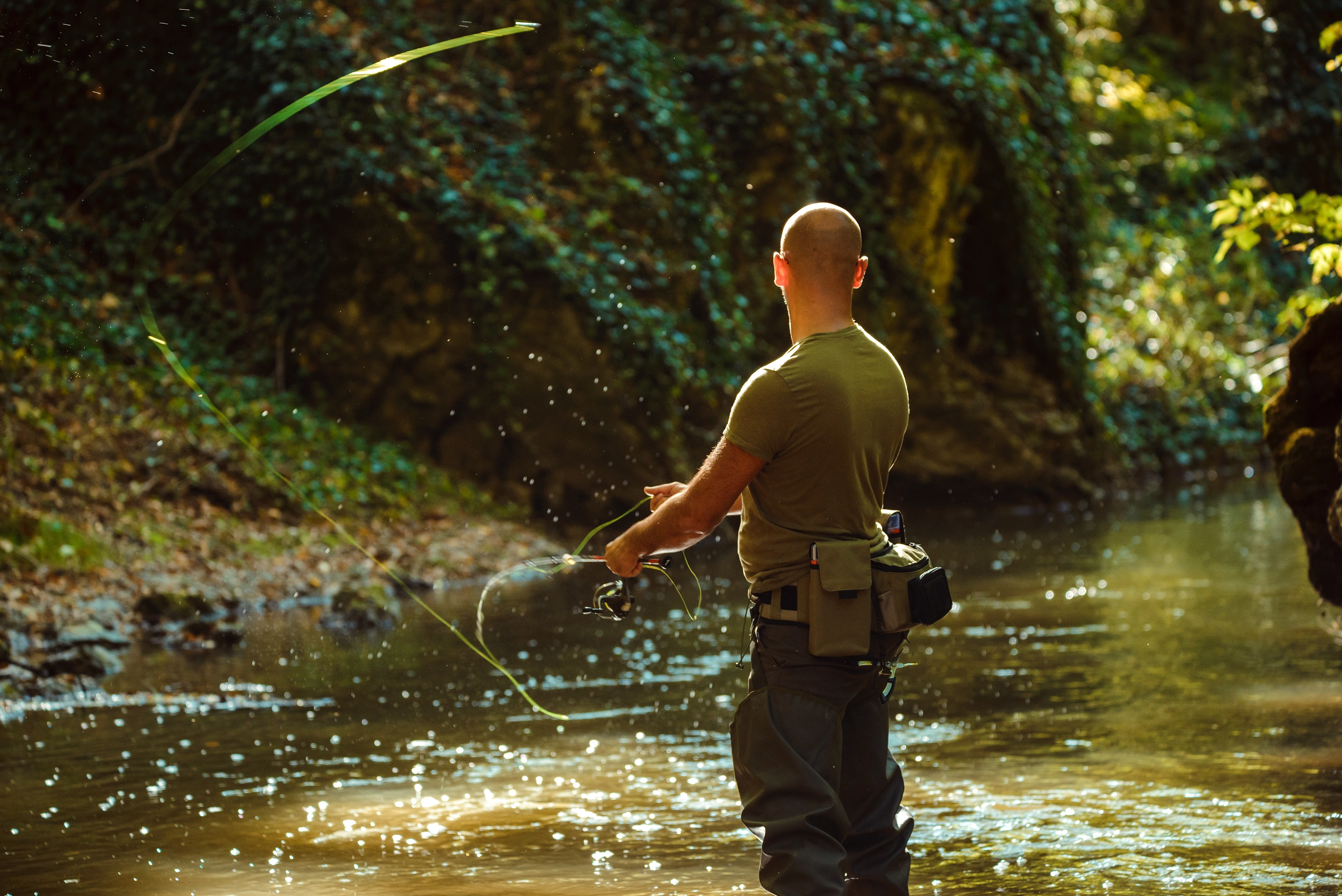
Summer fly fishing in Connecticut delivers consistent action when other seasons falter. Water temperatures stabilize between 58-72°F across the state's premier trout waters, triggering reliable terrestrial hatches and predictable feeding windows. The Farmington River maintains optimal flows around 200-300 CFS through July and August, while the state's warm water fisheries hit their productive peak as Smallmouth Bass and Largemouth Bass become highly aggressive in shallow structures. Dawn breaks early over Connecticut's rivers, and by 6:30 AM the first terrestrial activity begins. Anglers who understand summer's rhythm fish the early morning calm before switching to terrestrials and streamers during the heat of midday.02Reading the Water: Summer Conditions
Flow and Temperature Patterns
Connecticut's summer flows depend heavily on dam releases and natural baseflow conditions. The Farmington River benefits from consistent releases from the Riverton Dam, maintaining fishable flows even during dry spells. USGS gauge data shows typical summer flows:- Farmington River at Riverton: 180-350 CFS, temperatures 62-68°F
- Housatonic River: 400-800 CFS, temperatures 65-74°F
- Salmon River: 25-60 CFS, temperatures 58-66°F
- Naugatuck River: 45-120 CFS, temperatures 64-70°F
Hatch Activity
Summer hatches in Connecticut focus heavily on terrestrials and caddisflies. Peak activity occurs during these windows:- Ants: All day activity, peak 10 AM - 2 PM during windy conditions
- Beetles: Morning and evening, sizes 12-16
- Grasshoppers: Late July through September, peak midday activity
- Caddis: Evening hatches 6-8 PM, sporadic daytime emergences
- Trico Spinners: Early morning 6-9 AM on slow water sections
Weather Impact
Connecticut summers bring thunderstorms that dramatically affect fishing conditions. Post-storm periods often trigger the best fishing as terrestrials get blown into the water and oxygen levels increase. Monitor barometric pressure - falling pressure 24 hours before storms often produces exceptional dry fly fishing.03The Fly Box: Essential Summer Patterns
Terrestrial Patterns
Summer success revolves around terrestrial imitations. These patterns produce consistently when aquatic hatches slow:- Black Ant (sizes 14-18): Essential pattern for all Connecticut waters, fish tight to banks
- Cinnamon Ant (sizes 12-16): Effective during late summer when red ants are active
- Foam Beetle (sizes 12-16): Deadly in slower water sections, especially early morning
- Dave's Hopper (sizes 8-12): Late summer staple for aggressive feeding
- Chernobyl Ant (sizes 6-10): High-floating attractor, excellent dropper rig foundation
Aquatic Patterns
Despite terrestrial dominance, key aquatic patterns remain productive:- Elk Hair Caddis (sizes 14-18): Evening emergence periods, dead drift and skate presentations
- X-Caddis (sizes 14-16): Emerging caddis imitation during transitional periods
- Trico Spinner (sizes 20-24): Early morning on calm water sections
- Pheasant Tail Nymph (sizes 16-20): Subsurface staple throughout summer
Streamer Selection
Summer streamers target aggressive feeders during low-light periods:- Woolly Bugger (sizes 6-12): Olive, black, and brown variations
- Zonker (sizes 6-10): Rabbit strip patterns for deeper pools
- Muddler Minnow (sizes 6-12): Early morning and late evening periods
04Prime Waters
Farmington River
The Farmington River anchors Connecticut's summer trout fishing. The West Branch from Riverton Dam downstream to New Hartford provides 14 miles of premium water. Key summer tactics:- Upper Section (Riverton to Pleasant Valley): Consistent 200+ CFS releases, focus on pocket water with terrestrials
- Middle Section (Pleasant Valley to Collinsville): Mix of pools and riffles, excellent evening caddis hatches
- Satan's Kingdom: Deep pools and technical water, streamer fishing during low light
- Access: Multiple state and town access points, parking can be limited on weekends
Housatonic River
The Housatonic River offers diverse summer fishing from trout in the upper reaches to Smallmouth Bass in the lower river. Summer flows typically run 400-800 CFS:- Cornwall Bridge Area: Quality Brown Trout fishing, wade carefully due to swift currents
- West Cornwall to Falls Village: Mixed species water, terrestrials and streamers both effective
- Below Falls Village Dam: Prime smallmouth water, focus on structure and drop-offs
Salmon River
The Salmon River provides intimate small-stream fishing during summer months. Low flows require careful approach:- Upper Reaches: Native Brook Trout populations, approach quietly
- Colchester Area: Stocked trout and wild fish mix, terrestrials essential
- Flow Dependency: Fish early morning when temperatures are coolest
Naugatuck River
The Naugatuck River has improved significantly due to restoration efforts. Summer fishing focuses on the Thomaston to Waterbury section:- Thomaston Pool: Consistent trout holding water, evening caddis hatches
- Reynolds Bridge Area: Good access and varied water types
- Water Quality: Continue improving, best during stable flow periods
Connecticut River
The Connecticut River transforms during summer as Smallmouth Bass become highly active. Focus areas include:- Enfield Rapids: Prime smallmouth structure, wade with extreme caution
- Middletown Area: Varied species including occasional Striped Bass
- Tactics: Streamers, poppers, and large terrestrials most effective
05Species in Focus
Brown Trout
Brown Trout dominate Connecticut's summer trout fishing. These fish adapt well to warmer water and remain active throughout the season:- Feeding Times: Early morning (5:30-8:00 AM) and evening (6:00-9:00 PM)
- Preferred Temperatures: Most active 58-68°F, seek deeper water above 70°F
- Summer Behavior: Opportunistic feeding on terrestrials, aggressive to streamers in low light
- Prime Locations: Undercut banks, deep pools, structure around bridges and fallen trees
Rainbow Trout
Rainbow Trout remain active in well-oxygenated waters throughout summer:- Temperature Tolerance: Handle slightly warmer water than browns, prefer 60-70°F range
- Feeding Pattern: More willing to rise to dry flies during midday than browns
- Best Waters: Farmington River and stocked sections of smaller streams
- Summer Strategy: Focus on faster water with good oxygen content
Brook Trout
Brook Trout require the coolest water and are most temperature-sensitive:- Critical Temperature: Stressed above 68°F, seek spring-fed areas and headwaters
- Prime Time: Very early morning before water temperatures rise
- Best Locations: Upper Salmon River, small tributary streams
- Approach: Stealth essential, short accurate casts with small patterns
Smallmouth Bass
Smallmouth Bass reach peak activity during Connecticut summers:- Optimal Temperature: 68-75°F triggers most aggressive behavior
- Feeding Pattern: Active throughout the day, peak activity dawn and dusk
- Prime Waters: Connecticut River, Housatonic River, Candlewood Lake
- Structure Focus: Rocky drop-offs, submerged logs, bridge abutments
Largemouth Bass
Largemouth Bass thrive in Connecticut's warm water lakes and slower river sections:- Temperature Range: Most active 70-80°F
- Cover Orientation: Heavy structure focus - fallen trees, weed beds, docks
- Best Waters: Candlewood Lake, Bantam Lake
- Summer Pattern: Early morning topwater, midday deep structure, evening shallow feeding
06Techniques That Produce
Terrestrial Fishing
Summer terrestrial fishing requires specific approaches for consistent success:- Bank Fishing: Cast tight to undercut banks and overhanging vegetation
- Wind Advantage: Use windy days to your advantage - terrestrials get blown into water naturally
- Dead Drift vs. Twitch: Start with dead drift, add subtle movement if no response
- Multiple Fly Rigs: Use terrestrial as indicator with dropper nymph 18-24 inches below
Evening Caddis Tactics
Caddis hatches provide reliable evening action throughout Connecticut:- Timing: Activity begins 30 minutes before sunset, peaks at dusk
- Presentation: Both dead drift and skating presentations effective
- Rise Forms: Look for splashy rises indicating caddis activity
- Water Types: Focus on pool tails and moderate current areas
Streamer Strategies
Summer streamer fishing targets aggressive feeding during optimal periods:- Prime Times: First light (5:30-7:00 AM) and last light (7:30-9:00 PM)
- Water Targets: Deep pools, undercut banks, structure areas
- Retrieve Patterns: Vary from dead drift to aggressive strips
- Color Selection: Olive and black during bright conditions, lighter colors in low light
Nymphing Techniques
Subsurface fishing remains productive throughout summer heat:- Euro Nymphing: Highly effective in pocket water and riffles
- Indicator Methods: Traditional approach for deeper pools and slower water
- Weight Adjustment: Lower water requires lighter nymphs and longer leaders
- Fly Selection: Natural colors, smaller sizes (16-20) most effective
07Local Intel
Timing Windows
Connecticut summer fishing success depends heavily on timing:- Dawn Patrol: 5:30-8:00 AM produces the most consistent action before temperatures rise
- Midday Strategy: Focus on deeper pools, nymphing, and terrestrials near shade
- Evening Window: 6:00-9:00 PM for surface activity and aggressive streamer fishing
- Thunderstorm Recovery: 2-4 hours after storms often provide exceptional fishing
Pressure Points
Connecticut's trout waters receive significant pressure. Understanding angler patterns helps:- Weekend Crowds: Popular access points fill early, arrive before 7:00 AM
- Weekday Opportunities: Tuesday-Thursday offer the least pressure
- Lesser-Known Water: Small tributaries and upper sections see fewer anglers
- Weather Advantage: Light rain and overcast conditions reduce angler pressure
Water Level Monitoring
Success often depends on reading water conditions correctly:- Dam Releases: Farmington River releases change fishing conditions significantly
- Rain Impact: Small streams become unfishable quickly, clear within 24-48 hours
- Drought Conditions: Focus on spring-fed waters and dam release areas
- Temperature Monitoring: Carry a thermometer, avoid fishing trout water above 72°F
"Summer trout fishing is about timing and temperature. Fish early, fish late, and always check water temperature. Above 72°F, give the trout a break and target warm water species instead." - Farmington River Guide
08Gear Checklist
Rod and Reel Setup
Summer conditions favor versatile setups:- Primary Rod: 9-foot 5-weight for versatility across species and techniques
- Secondary Rod: 8.5-foot 4-weight for small streams and spooky fish
- Reel: Quality drag system for potential larger fish, extra spools helpful
- Backing: 100-150 yards, 20-30 pound Dacron or Gelspun
Line Systems
- Floating Line: Weight-forward taper for terrestrials and dry flies
- Sink-Tip: 10-foot intermediate for streamer fishing
- Leaders: 9-12 foot tapered, 4X-6X tippet range
- Tippet Material: Fluorocarbon for nymphs, monofilament for dry flies
Essential Accessories
- Thermometer: Digital stream thermometer for water temperature monitoring
- Net: Rubber bag landing net, 15-17 inch hoop
- Nippers: Sharp cutters for clean tippet cuts
- Forceps: Curved hemostats for hook removal
- Floatant: Gel and powder for dry fly maintenance
- Split Shot: Various sizes for nymph weight adjustment
Clothing and Waders
Summer conditions require comfort and sun protection:- Waders: Lightweight breathable chest waders, avoid neoprene
- Boots: Felt or rubber soles with good traction
- Sun Protection: Long-sleeve shirts, wide-brim hat, polarized sunglasses
- Layering: Early morning can be cool, midday hot
09Regulations & Conservation
Licensing Requirements
Connecticut requires proper licensing for all anglers 16 and older:- Resident License: Annual freshwater fishing license required
- Trout Stamp: Additional trout stamp required for all trout waters
- Non-Resident: Non-resident licenses available for daily, 3-day, or annual periods
- Purchase Locations: Online, license agents, and some sporting goods stores
Special Regulations
Many Connecticut waters have specific regulations that change seasonally:- Farmington River: Catch and release, artificial lures only in designated sections
- Housatonic River: Mixed regulations, check current rules by section
- Trout Management Areas: Special rules often apply, 2-fish limits common
- Seasonal Closures: Some waters close during spawning periods
Conservation Practices
Connecticut's fisheries depend on responsible angling practices:- Temperature Monitoring: Avoid fishing trout when water exceeds 72°F
- Proper Handling: Keep fish in water, use barbless hooks, minimize air time
- Native Species: Practice catch and release for native brook trout populations
- Habitat Protection: Stay on designated trails, pack out all trash
10Sources & References
- Connecticut DEEP Freshwater Fishing Regulations - Official state fishing regulations and license requirements
- USGS Connecticut Water Data - Real-time streamflow and water temperature data
- Trout Unlimited - Conservation organization with Connecticut chapter resources
- Connecticut Trout Stocking Program - Current stocking schedules and locations
- Connecticut State Parks and Forests - Access information for public fishing areas
- National Weather Service New York - Weather forecasts affecting Connecticut fishing conditions
- Connecticut Water Quality Standards - Water quality monitoring and assessment data
- Connecticut River Watershed Council - Conservation and restoration efforts affecting regional fisheries
Top Summer flies for Connecticut
Ranked by how often they show up in this season's reports.
nymphHellgrammite FlyHellgrammites are a year-round food source in rocky rivers, effective for Smallmouth Bass and opportunistic trout feeding subsurface.terrestrialHopperSummer is prime terrestrial season, with grasshoppers providing a substantial food source for trout and bass along grassy banks.dryIsonychia DunIsonychia mayflies are actively hatching on freestone rivers during summer, making this a prime pattern for rising trout.dryElk Hair CaddisCaddis are active throughout the warmer months. This is a versatile adult imitation, effective for rising fish.dryYellow SallyYellow Sally stoneflies are abundant along freestone streams in summer, drawing aggressive strikes from opportunistic feeders.streamerPine Squirrel LeechSmall leech patterns effectively mimic sluggish baitfish and annelids in warmer water, enticing strikes from larger brown trout and smallmouth.dryBeetle (Crowe)Terrestrial beetles are often dislodged from streamside vegetation during summer, effective for trout looking for surface food near shaded banks.nymphHare's Ear NymphA versatile nymph pattern that imitates a wide range of aquatic insects, effective year-round in freestone streams.
Waters in Connecticut 7 to fish
Fly shops nearby
Local flies, current advice and guided trips.
Need gear or a guide?
Find fly shops near Connecticut's best summer waters for local flies, advice and guided trips.
Ask an AI about this page